
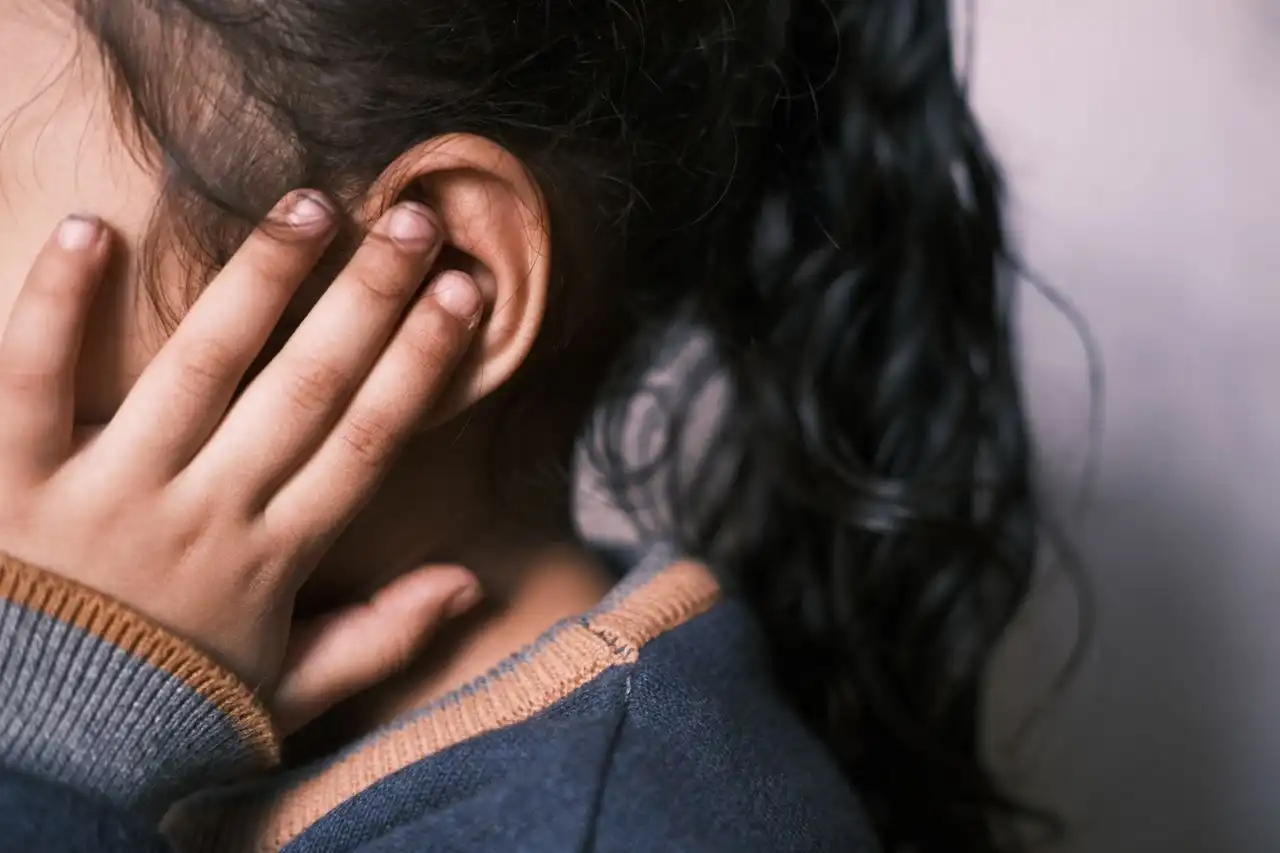
It's usually the middle of the night. Your child wakes up crying and holding one side of their head, or a toddler keeps tugging at one ear and won't settle.
Most children's earache is a middle-ear infection that clears up by itself, usually within two to three days. Antibiotics help far fewer children than most parents expect; pain relief makes the biggest difference.
This guide covers what to do in the first few hours, how pharmacists tell a middle-ear infection apart from other causes, and the signs that mean your child should be seen the same day. Qrystal Pharmacy is at 301 Borough High Street, a couple of minutes from Borough station.
What to do first
Whatever the cause, the first steps are the same.
- Give pain relief, at the right dose. Paracetamol or ibuprofen, using the dose on the pack for your child's age and weight. Give it regularly for the first day or two rather than waiting for the pain to come back. This is the most effective treatment there is for ear pain, including when antibiotics are used.
- Keep them drinking. Little and often if swallowing is uncomfortable.
- Let them rest, ideally propped up a little. Many children find the pain worse lying flat.
- Don't put anything in the ear. No cotton buds, no oil, no drops you have at home, unless a pharmacist or doctor has suggested them. If the eardrum has a small tear, some drops can do harm.
- Check their temperature and keep an eye on how they are overall. A child who is miserable but still playing between doses is very different from a child who is floppy or hard to wake.
Unsure about a dose? Call us on 020 7403 2237. It's a quick question for us.
Why children get so many ear infections
Behind the eardrum is a small air-filled space called the middle ear. A thin tube, the Eustachian tube, connects it to the back of the nose and throat. Its job is to let air in and fluid drain out.
In young children that tube is shorter and flatter than in adults, so when a cold makes the lining swell, it blocks easily. Fluid gets trapped, germs multiply in it, and pressure builds against the eardrum. That pressure is what hurts.
This is why ear infections so often follow a cold by a few days, and why they're most common under the age of 2. Most children grow out of them as the tube lengthens.
Signs to look for
Older children can usually tell you their ear hurts. In babies and toddlers, the clues are less direct:
- Pulling, rubbing or holding one or both ears
- A temperature of 38°C or higher
- Crying, irritability or restlessness, often worse lying down or at night
- Not feeding or eating well, because sucking and swallowing change the pressure in the ear
- Seeming not to hear you or not responding to quiet sounds
- Recent cold symptoms: a runny nose or cough in the days before
If the pain suddenly eases and sticky fluid appears, the eardrum has probably burst. It sounds alarming, but the pressure has been released, and small tears usually heal on their own within a few weeks. It still needs assessing, because this is one of the situations where antibiotics are recommended.
Ear pulling on its own, in a happy child, often isn't an infection. Babies discover their ears, and teething makes them rub around the jaw. Look at the whole picture.
Is it really a middle-ear infection?
Not all earache comes from the middle ear. When we assess a child, part of the job is ruling out the look-alikes.
- Outer-ear infection (otitis externa). An infection of the ear canal, common after swimming. The giveaway is that it hurts more when you gently pull the outer ear or press the small flap in front of the canal. It's treated differently, usually with drops.
- Referred pain. A sore throat, tonsillitis or a problem with a tooth can all show up as earache because they share nerves. If your child also has a very sore throat, our guide to whether a sore throat needs antibiotics may help.
- Glue ear. Fluid that lingers behind the eardrum after an infection. It causes muffled hearing rather than pain, and usually settles over a few months.
- Something in the ear. Small children do push beads, food and bits of toy into their ears. Don't try to remove it yourself. That needs a GP or urgent care.
When it's urgent
Very rarely, infection spreads to the bone behind the ear (mastoiditis) or further, and that needs treatment quickly.
Get same-day medical help (your GP, NHS 111, or 999 if severe) if your child has:
- Swelling, redness, pain or tenderness behind the ear
- An ear that sticks out further from the head than usual
- A stiff neck, dislike of bright light, or a severe headache
- Unusual drowsiness, confusion or weakness, or a face that looks lopsided or droops on one side
- A rash that doesn't fade when you press a glass against it, or mottled skin
- Looks seriously unwell, is floppy, or you can't wake them properly. Call 999
Also get advice from your GP or NHS 111 rather than a pharmacy if your baby is under 1 year old, or if your child has a long-term condition that makes infections riskier, such as a heart, lung, kidney or immune problem, or was born very prematurely.
Don't wait for a pharmacy consultation if any of the above apply. Our guide to urgent care near Borough sets out where to go.
Do they need antibiotics?
The evidence is clear: more than 8 in 10 children with a middle-ear infection get better without antibiotics, often within two to three days. Many are viral, and even when bacteria are involved, antibiotics typically shorten the illness by less than a day while causing diarrhoea or rashes in some children.
So under the NHS pathway, antibiotics are recommended for two groups:
- A child or young person with fluid or pus coming from the ear, or where the eardrum is thought to have burst
- A child under 2 with infection in both ears, where symptoms have lasted more than three days or are severe
For everyone else, the right treatment is pain relief, time and a clear plan if things don't improve. That isn't stinginess. It gets children better with the fewest side effects and keeps antibiotics working for when they're needed. We explain the bigger picture in our guide to antibiotic resistance.
What a pharmacist can do
Under Pharmacy First, we can assess earache for:
- Children and young people aged 1 to 17
- Registered with an NHS GP in England
- With earache that has come on recently
A parent or carer should come with younger children. In our private room, we ask about symptoms, temperature, feeding and allergies, then look in the ear with an otoscope, a small torch with a single-use tip. It doesn't hurt, though younger children may want a cuddle on your lap. It usually takes ten to fifteen minutes.
There are four possible outcomes:
- Pain relief and self-care, with a clear plan. This is the outcome for most children.
- Numbing ear drops for moderate to severe pain that regular paracetamol or ibuprofen isn't controlling, as long as the eardrum is intact. They're used up to three times a day for up to a week. We'll ask you to come back if there's no improvement within three to five days.
- A five-day course of antibiotics if your child is in one of the two groups above. The usual choice is amoxicillin, as a liquid for younger children, with an alternative if they're allergic to penicillin.
- Referral to a GP or urgent care, if your child is under 1, has had three or more ear infections in six months (or four in a year), has a condition that makes complications more likely, or has any of the urgent signs above.
Full details are on our children's earache treatment page.
The next few days
A typical middle-ear infection lasts around a week, but the worst is usually over in two to three days.
Come back to us, or see your GP, if:
- There's no improvement after three to five days of pain relief or ear drops
- Your child has been on antibiotics for two to three days and isn't improving
- Symptoms get worse at any point, or any of the urgent signs appear
Slightly muffled hearing for a few weeks afterwards is normal while fluid clears. Hearing that hasn't recovered after about six weeks needs a GP check.
If it keeps happening
Three or more ear infections in six months, or four in a year, is the point where a GP should take a look rather than a pharmacy. Things known to make them more likely include living with smokers, dummy use after about six months, bottle-feeding lying flat, and simply being at nursery, where colds circulate.
The NHS overview of ear infections covers the longer-term options, including when a referral to an ear, nose and throat specialist makes sense.
Autumn term in SE1
Ear infections follow colds, and colds arrive with the school term. From September, the nurseries and primary schools around Borough, Bermondsey and Southwark pass every new virus around, and the earaches follow a few days later.
If a cold has moved into an older child's face instead and hasn't cleared after ten days, our guide to telling sinusitis from a bad cold covers what to do next. And if the term has brought crusty sores home as well, our guide to impetigo in children covers treatment and the school rules. For the wider seasonal picture, including the children's nasal flu vaccine, see our winter health guide for SE1.
Getting seen near London Bridge
We're a short walk from most of Borough, London Bridge and Bankside:
- Borough Underground (Northern line): about 2 minutes' walk
- London Bridge (Northern & Jubilee lines, National Rail): about 8 minutes
- Guy's Hospital, Borough Market and Southwark Cathedral: all within about ten minutes
- Buses: frequent routes stop directly outside
Qrystal Pharmacy, 301 Borough High Street, London SE1 1JH. Open Monday to Friday 9:00–18:30 and Saturday 9:00–14:00.
- Call: 020 7403 2237 to check a dose or ask whether to come in
- Walk in: no appointment needed for Pharmacy First
- Book a consultation if you'd rather hold a slot around the school run
Most children's earache is a rough day or two that pain relief will see through. But if the pain isn't settling after a day, there's fluid coming from the ear, or you're simply not sure, bring them in. That's exactly what the service is for.