
The question that brings most parents in isn't really a medical one. It's this: "The school has sent them home — when can they go back?"
That's a fair place to start, because with impetigo the answer is specific, it's written down, and it's often shorter than people expect. This guide covers the official rule, how to recognise impetigo, how it's treated, and how to stop it working its way through the rest of the house.
Qrystal Pharmacy is on Borough High Street, a couple of minutes from Borough station, and we assess and treat impetigo on the NHS without an appointment.
When can they go back to school or nursery?
The UK Health Security Agency sets exclusion periods for childcare and school settings. For impetigo, the guidance is that infected children should stay away from the setting:
until all blisters have formed scabs, or 2 days after starting antibiotics
In practice that gives you two routes back, whichever comes first:
- Start treatment, then wait two days. For most children this is the quicker route, and the main practical reason to get impetigo assessed promptly rather than waiting for it to clear.
- Wait for every sore to crust over. Without treatment this takes longer, and the child remains a source of infection in the meantime.
Schools and nurseries don't need to notify their health protection team about a single case. You can read the full table in the government's exclusion periods guidance.
Worth saying plainly: some settings apply their own stricter policies. If yours asks for something different, it's their call — but the national guidance is a useful thing to have in hand when you ask.
How to recognise impetigo
Impetigo is a bacterial skin infection, usually caused by Staphylococcus aureus and sometimes by Streptococcus. It's most common in young children, though adults get it too.
Typical signs:
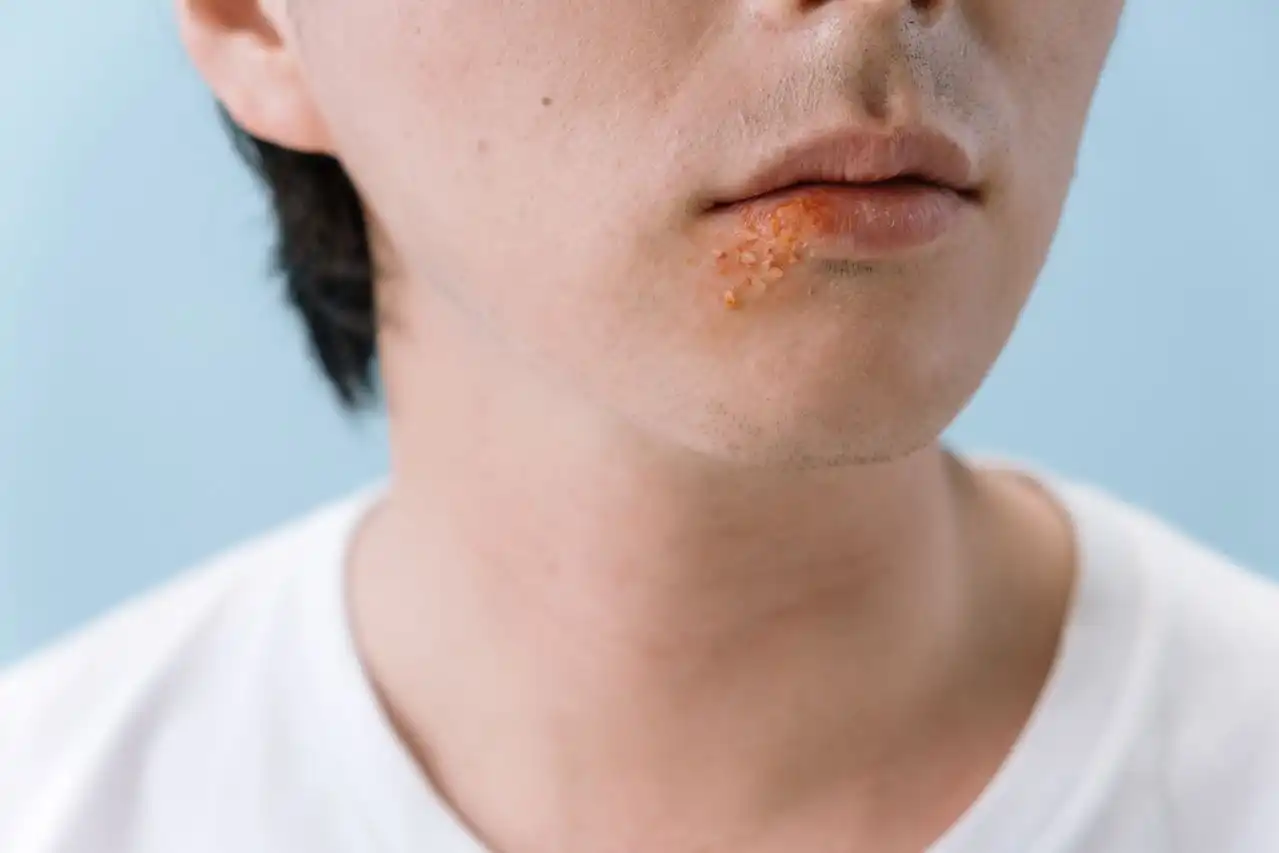
- Red sores or small blisters, most often around the nose and mouth, though they can appear anywhere
- Blisters that burst quickly, leaving raw, weeping patches
- A golden or honey-coloured crust forming over the sores — the feature most people recognise
- Itching, but rarely severe pain
- Sores that spread to nearby skin, often because of scratching
It very often starts where the skin is already broken: a graze, an insect bite, a patch of eczema, or the sore skin under a streaming nose during a cold. That's why it clusters in the autumn term, when colds and close contact both peak.
There's also a less common bullous form, which causes larger fluid-filled blisters that take longer to crust.
The NHS overview of impetigo has photographs across a range of skin tones, which is genuinely useful — the redness can be much less obvious on darker skin, and the crusting is often the more reliable sign.
How it's treated
Impetigo does clear by itself eventually, usually over two to three weeks. The reason to treat it is that treatment shortens that time, cuts the contagious period sharply, and gets your child back to school sooner.
Treatment depends on how much skin is involved:
- A small, localised patch is usually treated with a cream. Hydrogen peroxide cream is commonly used first; an antibiotic cream such as fusidic acid is an alternative where that isn't suitable.
- More widespread impetigo, or the blistering form, may need antibiotic tablets instead.
- Someone who is unwell with it — feverish, or with rapidly spreading redness — needs assessment beyond the pharmacy.
A few practical points that make creams work better:
- Gently wash off the crusts with warm soapy water before applying, so the cream reaches the infected skin.
- Wash your hands before and after every application.
- Finish the course even when the skin looks better. Stopping early is a common reason impetigo comes back.
- Come back if it isn't clearly improving within about a week, or if it's spreading despite treatment.
Stopping it going round the house
Impetigo is very good at spreading within families. It passes by direct contact with the sores and via anything that touches them.
- Separate towels and flannels for the affected child, washed after each use
- Wash bedding and pillowcases at a high temperature
- Keep nails short and discourage scratching — loose cotton gloves at night help younger children
- Cover sores loosely where you can, particularly if siblings share a bath or bed
- Wipe down shared toys and surfaces with ordinary cleaning products
- Don't share cups, cutlery or lip balm until the sores have crusted
If a brother or sister develops sores, bring them in too. Treating everyone who's affected at the same time is the fastest way to stop the cycle.
Adults get it too
Impetigo is thought of as a childhood infection, but parents regularly catch it from their children — and adults pick it up in other ways as well.
Common routes in adults include shaving nicks, contact sports such as rugby, wrestling and martial arts, shared gym equipment and towels, and skin already broken by eczema or a cold sore. It looks the same as in children and is treated the same way.
There's no single national exclusion rule for adult workplaces. If your job involves close contact with children, vulnerable people or food, speak to your employer before going in, and keep the sores covered until they've crusted or treatment has been underway for two days. Adults are covered by the same Pharmacy First service as children.
When it needs more than a pharmacy
Most impetigo is minor. Some situations need a GP or urgent care instead.
Seek urgent help — NHS 111, or 999 if a child is seriously unwell — if there is:
- A rash covering large areas of the body
- A high temperature alongside the rash
- A child who is floppy, unusually drowsy, or looks very unwell
- Deep, very painful sores, or redness spreading rapidly around them
See a GP rather than us if:
- Your baby is under 1 year old
- Impetigo keeps coming back
- It hasn't improved after a course of treatment
If impetigo keeps recurring in a child with eczema, it's worth raising the eczema itself — well-controlled skin is much less likely to become infected.
Who we can treat
Under Pharmacy First, our impetigo service covers:
- Adults and children aged 1 and over
- Registered with an NHS GP in England
- Localised impetigo suitable for treatment in the community, including the bullous form
The consultation takes place in our private room, where the pharmacist examines the rash, confirms whether it's impetigo, and supplies the right treatment during the same visit. It's free on the NHS. There's more detail on our impetigo treatment page.
Families in Borough and Southwark
Impetigo is a school-term condition, and this is a school-dense part of London. Between the primary schools and nurseries across Southwark, after-school clubs, and the soft-play and playground circuit, children here are in close contact for most of the week — which is exactly how impetigo spreads.
We see the pattern most at the start of the autumn term and through the cold season, when runny noses and chapped skin give the bacteria an easy way in. If one child in a class has it, it's worth checking your own child's face at bath time for a week or two.
For the families who find weekday appointments hardest, our Saturday morning opening tends to be the most useful slot.
Where to find us
Qrystal Pharmacy, 301 Borough High Street, London SE1 1JH.
- Borough Underground (Northern line): about 2 minutes' walk
- London Bridge (Northern & Jubilee lines, National Rail): about 8 minutes
- Guy's Hospital and Borough Market: both a short walk
- Buses: frequent routes stop directly outside
Open Monday to Friday 9:00–18:30, Saturday 9:00–14:00.
Get it looked at
- Call: 020 7403 2237
- Visit: 301 Borough High Street, London SE1 1JH — walk in, no appointment
- Book a consultation if you'd prefer a set time
If you're also dealing with the rest of the autumn-term colds, our guide to when a sore throat needs antibiotics covers the other question we're asked most at this time of year.
Impetigo looks alarming and spreads easily, but it's one of the most treatable things we see. Start treatment today, and in most cases your child is back in class two days later.